Few places in Canada are as tied to a single group of painters as Huntsville. Tom Thomson paddled and sketched the lakes and rivers between here and Algonquin Park, and the painters who became the Group of Seven followed him north. Today the town has turned that history into a free, year-round outdoor gallery, and it makes an easy day out in any season.
The Group of Seven Outdoor Gallery
The Group of Seven Outdoor Gallery is a collection of hand-painted reproductions of works by Tom Thomson and the Group of Seven, mounted on the outside walls of businesses and public buildings. Counts vary as murals are added, from just under 100 to more than 100 across the whole region, with the main gallery of about 38 murals in downtown Huntsville. Satellite murals extend to Dwight, Dorset, Baysville, Oxtongue Lake and Algonquin Park.
The murals are painted by artists from across Canada under the direction of muralist Gerry Lantaigne, who championed the project. They are free to view, all year, at your own pace.
How to do the walk
Start at the bronze statue of Tom Thomson in front of the Algonquin Theatre at 37 Main Street East. From there, the downtown murals are close together and easy to cover on foot in an hour or two. Download the tour map from the gallery's website before you go, and take your time: each mural has a plaque naming the original painting and artist.
In summer, the Huntsville Festival of the Arts has run guided mural tours from the Thomson statue, with an optional painting class afterwards. Check the festival's website for the coming season.
Who were the Group of Seven?
The Group of Seven formed in 1920. Its founding members were J.E.H. MacDonald, Lawren Harris, Franklin Carmichael, A.Y. Jackson, Arthur Lismer, Frederick Varley and Frank Johnston, with A.J. Casson joining later. They set out to paint the Canadian landscape in bold colour and a new style, often working outdoors.
Tom Thomson was never a member. He drowned in Canoe Lake in Algonquin Park on July 8, 1917, three years before the group formed, but he was their friend, colleague and inspiration, and his paintings of Algonquin are among the best-known images in Canadian art.
Into Algonquin: Thomson's country
If you have a car and a few more hours, drive east on Highway 60 into Algonquin Park.
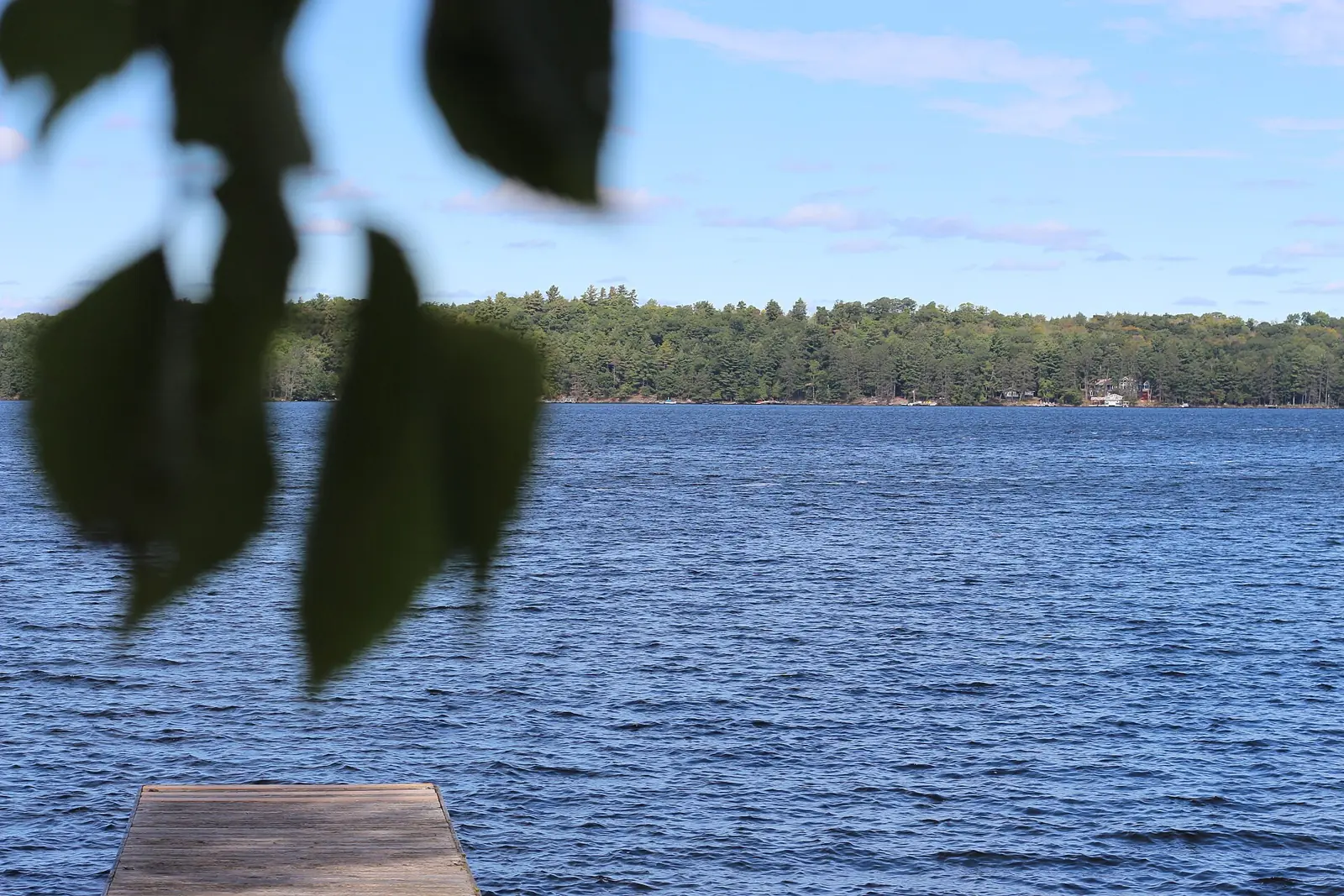
- Canoe Lake is at kilometre 14 of the Highway 60 corridor. In the paddling season you can launch from the access point and paddle about an hour and a half up the lake to the memorial cairn that Thomson's friends built at his favourite campsite. In winter the lake is frozen and the view from the shore has to do.
- The Algonquin Art Centre, at kilometre 20, shows work inspired by the park and is free to enter, though you need a valid park permit for your vehicle. It is seasonal, so check its dates before you go.
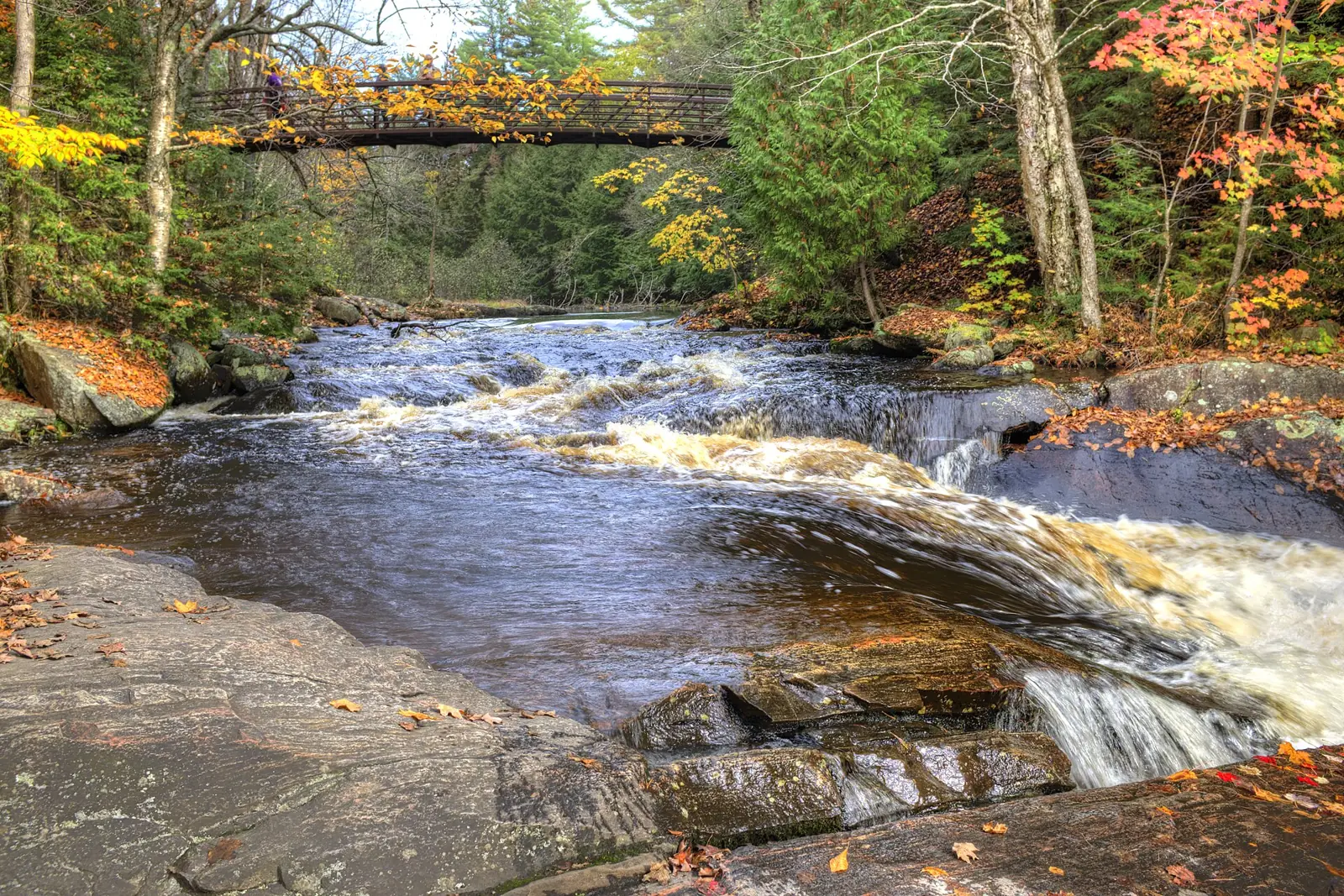
- Near the park's west gate, Ragged Falls on the Oxtongue River is a short walk from the parking area. Some believe the river appears in Thomson's work: he paddled the Oxtongue on a 1914 trip from Canoe Lake to Huntsville.
Outfitters such as Algonquin Outfitters at Oxtongue Lake rent canoes and sell maps in season.
Seeing the originals
The murals are reproductions. To see original Thomson works, plan a visit to the Art Gallery of Ontario in Toronto, which holds one of the largest collections of his paintings.
Make a day of it in Huntsville
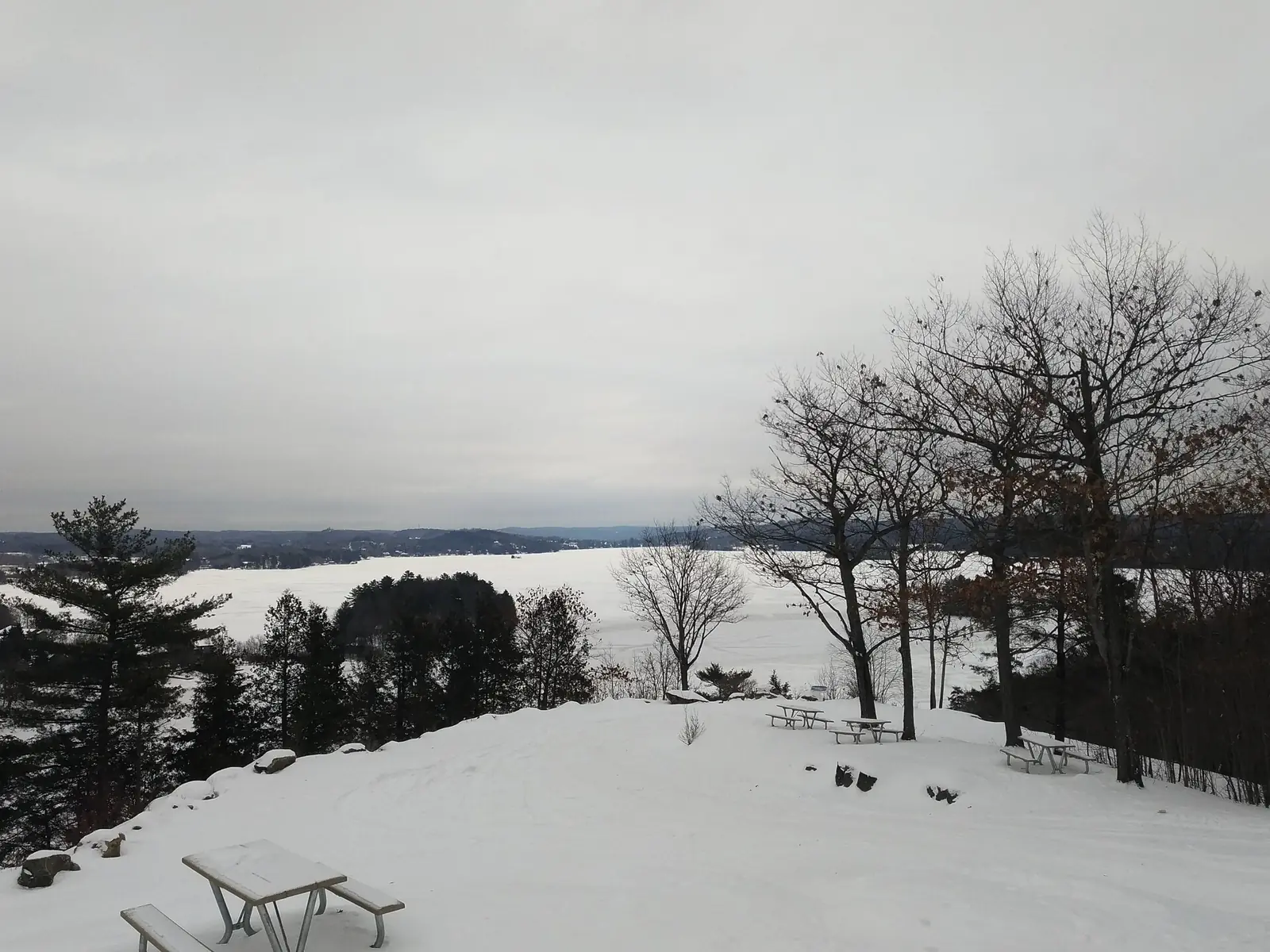
- Climb Lion's Lookout for the view over Fairy Lake and downtown.
- Visit Muskoka Heritage Place for local history.
- Catch a show at the Algonquin Theatre, where the walk began.
- Browse local studios such as The Potter's Studio & Gallery and The Framing Place & Gallery.
For more on the town, read our Huntsville guide. The land Thomson painted is Anishinaabe homeland; our introduction to Indigenous Muskoka is a good companion read.